Dates: April 30 and May 1, 2026
Location: New York City, NY
“It was a great and unique experience to be in building discussions with other nonprofits going through the same or similar challenges.” - NYC Sprinter
New York City - Thank you for joining us at the Sprint!
81 attendees joined us in person for the 2-day Sprint, representing the local Nonprofit ecosystem — including end users, admins, developers, architects, and industry partners from the New York metro area and beyond.
To everyone who joined: thank you for carving out time during what we know is an already busy time of year. Your willingness to share your skills, insights, and energy made this event truly exceptional. We’re so grateful for your time and passion.
60% of the room were NEW sprinters (!) — and our returning leaders rose to the occasion beautifully, mentoring newcomers and creating the collaborative, welcoming atmosphere that defines our community.
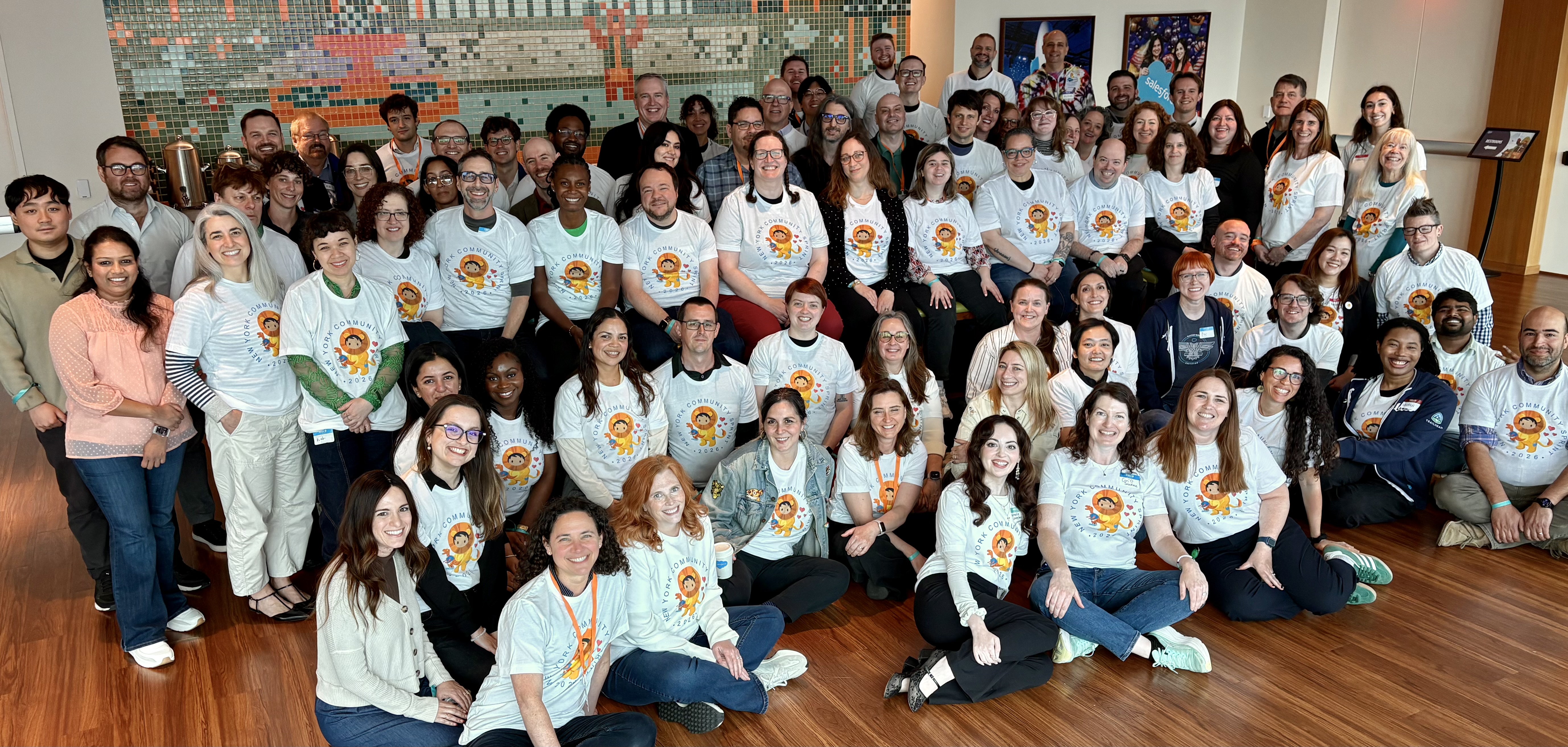
Community Sprint group photo, April/May, 2026.
Let’s Sprint!
After breakfast and intros, it was time to get to work. Attendees had the option to join 3 existing project and 4 brand-new projects on the spot. Collaboration kicked off quickly, with creative energy flowing.
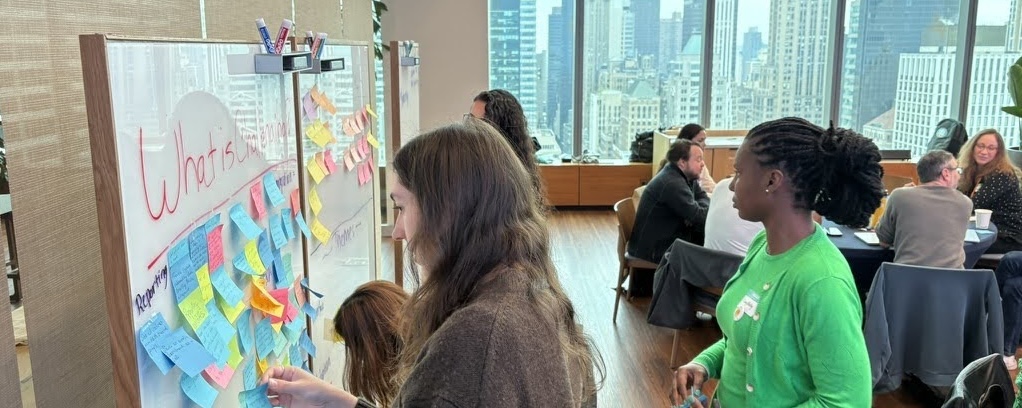 The morning innovation session (stickies galore!), grouping challenges into themes to organise potential projects, April/May 2026.
After a quick round of project identification based on prioritized challenges they are faced with today, attendees moved around the room to join the projects that resonated most with their interests and expertise. Collaboration was officially underway - and the creative energy was palpable.
Check out the 7 community-led projects that participated:
In alphabetical order
- Agentforce Nonprofit Best Practices (with 3 sub-groups: Discovery Framework, Migration Guidance and Stakeholders)
- Data Cleanliness for AI Readiness
- Doc Generation Tool
- Gift Matching/CSV
- How-To Videography
- Memberships
- Reporting FAQ
1. Agentforce Nonprofit Best Practices — Discovery Framework, Migration Guidance and Stakeholders subgroups
This project is actively developing practical guidance to help nonprofits adopt and get the most out of Agentforce Nonprofit, building on the community-led success of NPSP best practices resources. At this Sprint, 3 sub-groups participated — Discovery Framework, Migration Guidance, and Stakeholders — each moving beyond discovery and into building real, published resources that practitioners can use today.
Work performed at this sprint:
1) Discovery Framework Sub-group
- Discussed and iterated on documentation to guide use case evaluation for Discovery Framework functionality in AFNP.
- Aligned on the core purpose of the documentation and how guidance should be organized.
- Published a working Sprint document for the subgroup.
- Discovery Framework Sprint Document
Next Steps:
- Continue documenting detailed steps and considerations for utilizing Discovery Framework for nonprofit use cases.
2) Migration Guidance Sub-group
- Discussed resources and tools needed to help orgs assess readiness for AFNP migration, including orgs of different sizes, structures, and complexity.
- Explored existing NPSP-to-NPC translation resources on GitHub and considered how to integrate a “Thinking about Migration?” framework.
- Reviewed partner resources and identified ways to help connect orgs with migration partners.
Next Steps:
- Create a framework and timetable for evaluating linked resources for inclusion on GitHub.
- Build a self-assessment matrix/tool to help orgs of different sizes think through migrating from NPSP to AFNP.
- Focus on ways to help identify partners for migration.
3) Stakeholders Sub-group
- Discussed Households and householding decisions in AFNP.
- Created a Decision Tree to support practitioners making the decision of whether they need to use Households in AFNP.
Next Steps:
- Continue building out the Decision Tree.
- Create use cases outlining how people can approach relationship management in AFNP.
Team members:
- Discovery Framework: Vamshi Bangaru, Erica Bateman, Jimmy Roche, TJ Van Houten, Toby Ward.
- Growth: Michael Pitkowsky, Judi Sohn, Michael Masullo, Casidy Cunningham, Judith Feldman, Dar Veverka, Meg Hutson, Joe Behaylo, Robbie Rusbuldt.
- Stakeholders: Abby Morrow, Shari Carlson, Justin Gilmore, Gretchen Allnutt, Angela Kung.
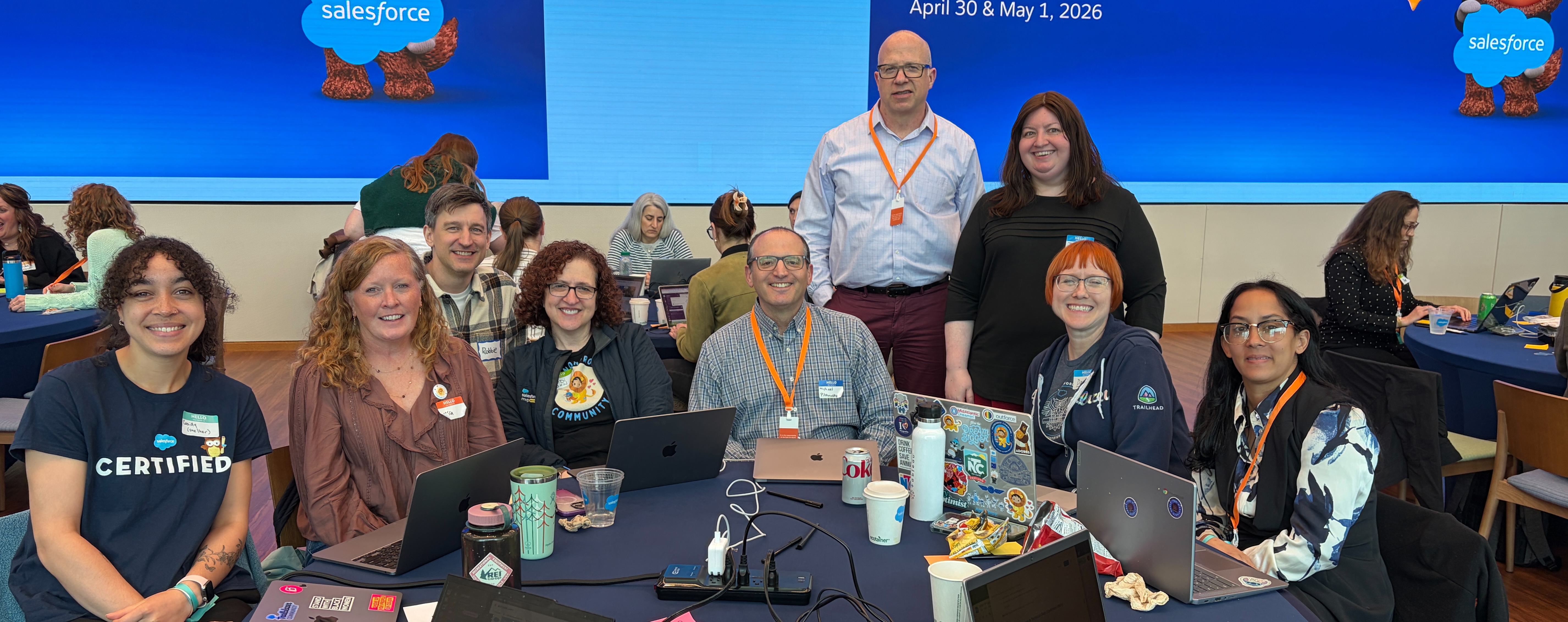 Migration Guidance sub-committee group photo!
2. Data Cleanliness for AI Readiness
The goal of this project is to help nonprofit Salesforce practitioners tackle messy data — the #1 blocker to successfully adopting AI tools like Agentforce — by identifying common pain points and developing tangible community resources for improving data quality. The team builds on the existing Data Quality Essentials resource on the Commons GitHub as a foundation.
Work performed at the Sprint:
- Identified key data pain points facing nonprofits, including how poor data quality contributes to AI hallucinations, challenges with deduplication and householding, stakeholder resistance to data purging, and limitations of native Salesforce merge functionality.
- Began developing a best practices framework covering data quality KPIs, completeness measurement, backups, and the principle of least privilege.
- Compiled a Tips & Tricks resource including data management tools (native duplicate rules, AppExchange tools like Apsona, Hubbl, PeerNova), Data Loader recommendations, and Agentforce-related guidance.
- Shared a resource for bringing the Classic Merge Contacts button into Salesforce Lightning.
Next Steps:
- Flesh out pain points and best practices with greater detail to produce tangible, community-ready documents.
- Explore a website page and/or blog post as a potential deliverable.
- Continue building out the Tools section (Day 2 focus).
Team members: Mike Baszto, Nicole Bowen, Dominic Schmitt, Hannah Frasco, Janeen Marquardt, Juliette Altman, Paola Gonzalez, Rohini Wagh, Tiffane James, Alex Christie.
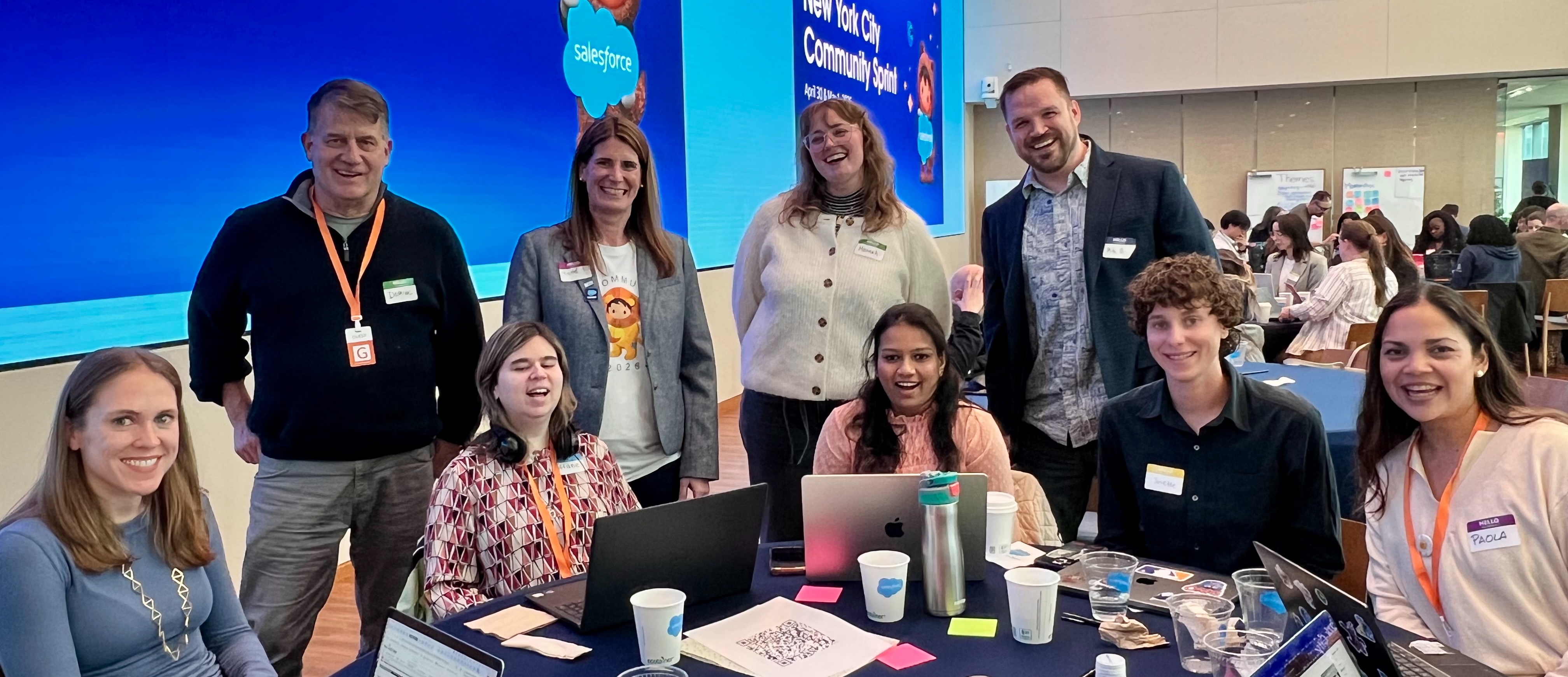 Data Cleanliness for AI Readiness group photo!
3. Doc Generation Tool
The goal of this project is to evaluate DocGen — a free, open-source document generation tool by Portwood Global Solutions (Dave Moudy) — for potential adoption as a recommended tool by the Commons community.
Work performed at the Sprint:
- Installed the DocGen package across a mix of demo orgs, identified and reported install bugs directly to the developer in the product’s Slack channel — a hotfix patch was issued and applied same-day.
- Successfully tested core functionality including child object tables, lookup merges, launching from Flow, and exporting/sharing templates.
- Confirmed bulk generation works (though sensitive to batch size with potential silent failures), and that core AFNP fundraising objects are accessible.
- Conducted a live PDF Butler comparison demo (recording available in the project canvas).
Next Steps:
- Test grandchild record population, mass merge, HTML templates, and complex formula merge fields.
- Continue comparing against other solutions (Conga, Apsona, PDFButler, DocsMadeEasy).
- Evaluate eSignature capabilities and form workflows (launch from record, save signed PDF back to record).
Team members: Marc Baizman, Kristina Winters, Alicia McFarlane, Alison Black, Amy Bucciferro, Daniel Gorton, George Reuter, Humna Riaz, Jacqueline Gurgui, Kevin Sung, Kim Strauss, Lauren Murphy, Pia Roeser, Talia Johnson.
Resources:
- DocGen by Portwood Global Solutions
- PDF Butler Comparison Demo Recording(Passcode: uCBJ2aC.)
- Using Flow to Generate PDF Files in Salesforce
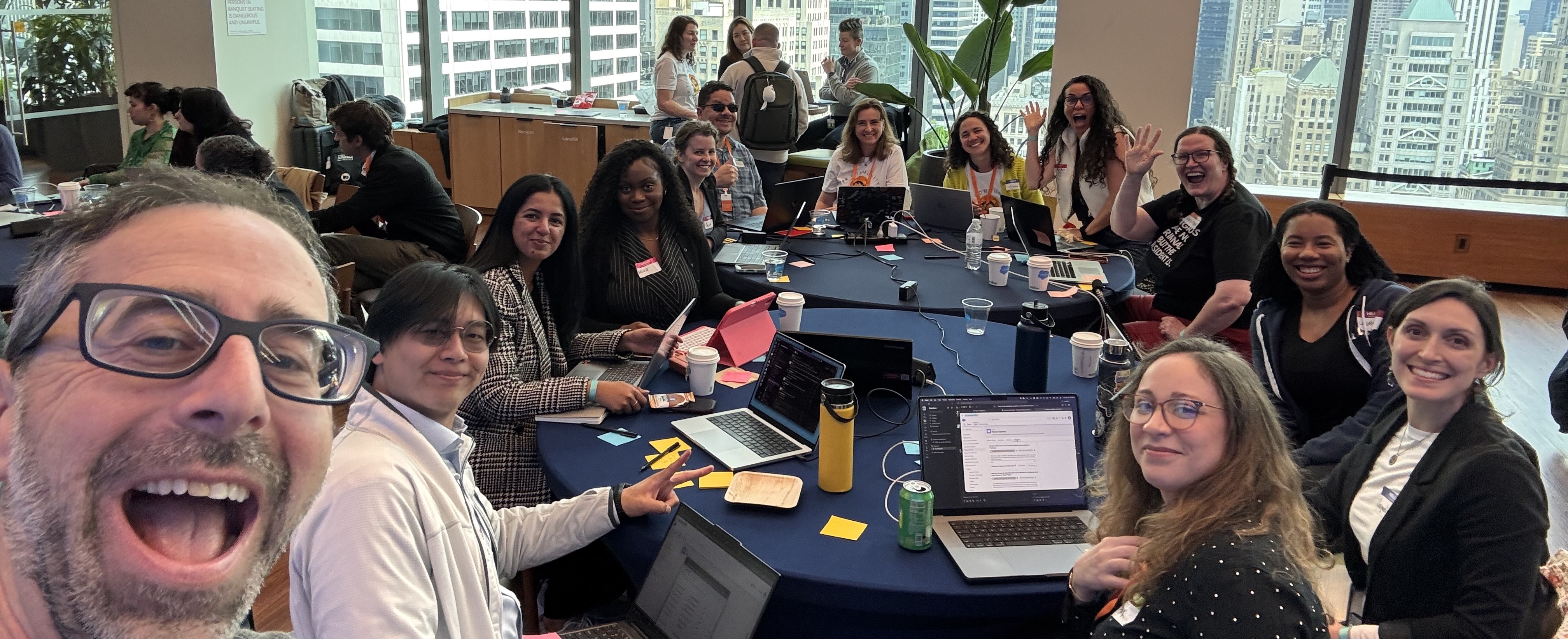 Doc Gen group photo!
4. Gift Matching / CSV Import
The goal of this project is to address the challenge of matching batched gift uploads to existing Salesforce records, including matching new gifts to open commitments and employer matching gifts — enabling more automated, accurate gift entry for nonprofits.
Work performed at the Sprint:
- Identified the core challenge: matching batched gift uploads to existing records and matching new gifts to open Gift Commitments.
- “Vibe coded” a batch matching utility that uses matching rules to prepopulate lookups on gift entry.
- Published a GitHub repo with the batch matching utility code.
- Researched fuzzy string matching techniques and explored prepopulating matching gifts from employers.
Next Steps:
- Add a button to the page layout for easier access to the matching utility.
- Explore matching gift commitments using only SOQL (no Apex).
- Continue exploring employer matching gift prepopulation.
Team members: Gabriel Csanalosi, Jake Garforth, Keith Howey, Caitie Adams.
Resources:
5. How-To Videography
The goal of this project is to create short, accessible video walkthroughs to help nonprofit admins and users navigate Salesforce — and at this sprint, the team took the opportunity to reimagine the program for a new era.
Work performed at the Sprint:
- Redrafted the program charter (previously last updated in 2018), shifting the content metric from product/topical definitions to relevance for the nonprofit practitioner.
- Expanded the scope of allowed content to include anything documented by Salesforce, the Commons, or Unofficial SF, regardless of product line.
- Developed a new Roles & Responsibilities process, envisioned a vote-driven public content queue to democratize content selection and promote transparency.
Next Steps:
- Finalize the charter draft and secure needed resource support.
- Build Salesforce configuration to host project management.
- Open up the application process to the broader Commons team.
Team members: Bill Florio, Hayley Tuller
6. Memberships
The goal of this project is to build a membership schema and app to help nonprofits structure, manage, and automate membership programs within Salesforce — including onboarding flows, membership products, and AI-assisted setup.
Work performed at the Sprint:
- Reviewed the existing Membership Essentials package and conducted AI tools enablement for working with the package.
- Began developing an interactive onboarding flow to support the business analysis process for structuring membership products.
- Drafted a detailed question set to drive the onboarding flow, mapped to the Membership Essentials field list, and began scoping a Membership Setup Assistant experience.
- Built out a Config Doc and worked on a LucidChart diagram to map the flow logic.
Next Steps:
- Further development of the onboarding flow.
- Use AI to generate automated tests for the package.
- Vet and order the question set to determine which questions are essential for the Membership Setup Assistant.
Team members: Aron Schor, Bryan Graves, Tania Ortiz-Ashby, Lucas Burke, Kat Zhao, Melissa Shepard, Ebony Reilly, Michael Kolodner, Chris Pifer.
Resources:
7. Reporting FAQ
The goal of this project is to gather a combination of pain points, recommendations, and how-to’s around Salesforce Reporting and Dashboards — investigating existing documentation, noting what’s outdated, and transforming it all into an accessible, easy-to-use FAQ resource for nonprofit practitioners.
Work performed at the Sprint:
- Identified core challenge: significant end-user confusion around reporting, with existing documentation that is often long, dense, outdated, and unclear about whether it applies to a specific product vs. general Salesforce.
- Created a streamlined FAQ Google Doc referencing existing documentation and noting where docs are outdated.
- Compiled a recommendations list including tools like Zkipster (attendance tracking), a Salesforce Flow Metadata Downloader Chrome extension, and the University of Chicago Strategic Data Storytelling course (Tableau).
- Gathered and documented inline editing behavior (e.g., why the lock icon appears), sourcing answers from internal SF admins.
Next Steps:
- Continue formatting the document into a traditional, easy-to-modify FAQ structure.
- Have someone with more technical knowledge review for accuracy and to identify if better solutions exist.
- Publish the Reporting FAQ to the Commons GitHub Pages site.
Team members: Catherine Marciano, Abby Verbosky, Rebecca Nichols, Meg Pickarski, Luiza Vaskys Lima, Tracie Wheeler, Rosanne Proga, Lauren Murphy, Jacqueline Gurgui.
THANK YOU to our Tech Mentors, PMs and volunteers!
WOW - what an incredible amount of work to get done in just. two. days. We’re constantly amazed by the brilliance, generosity, and grit this community brings, and this Sprint was no exception. You came ready to build, collaborate, and solve real challenges together. We’re so impressed by what was accomplished in just a few hours.
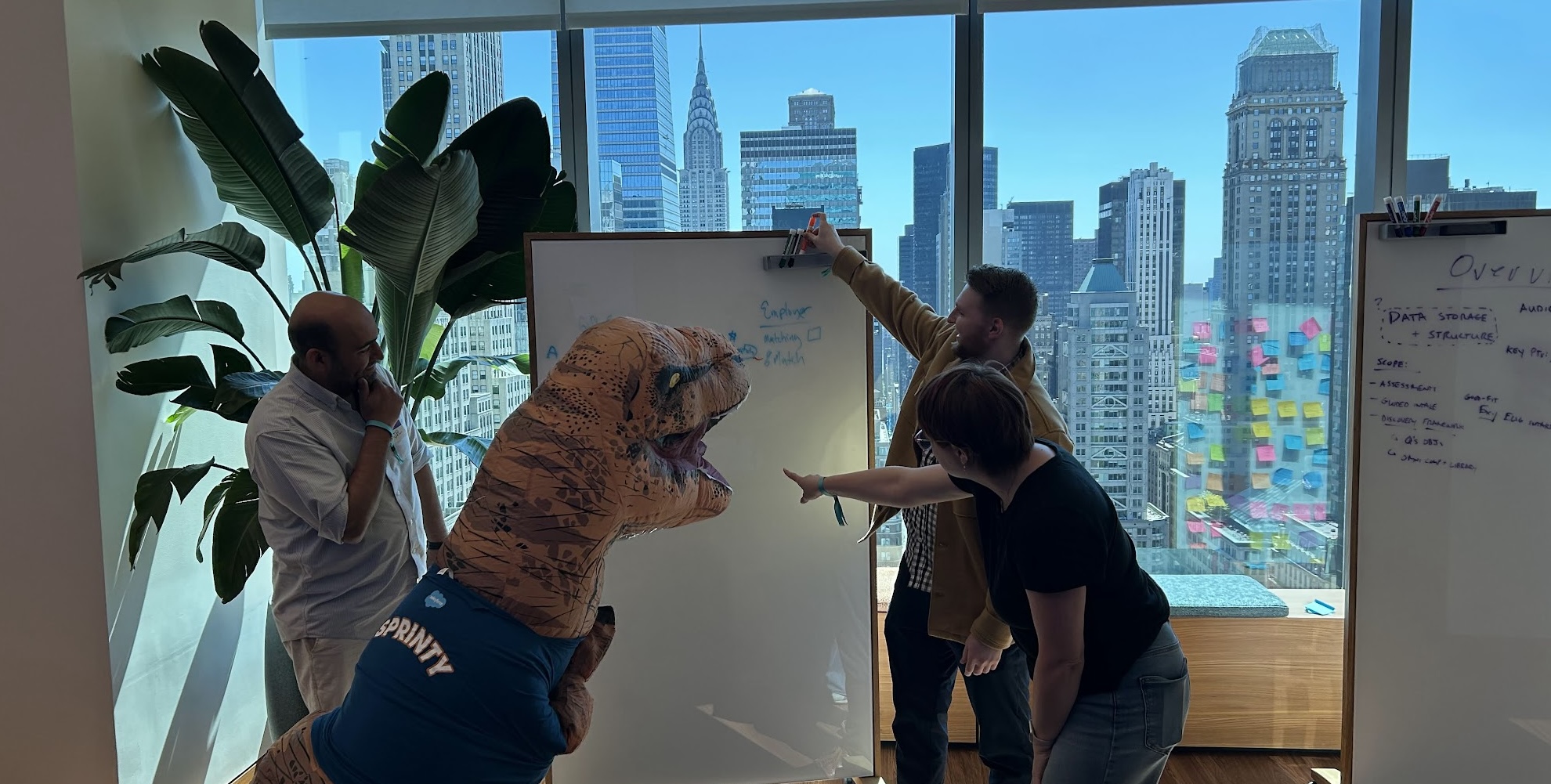
Gift Matching group whiteboarding with Sprinty!
What’s next?
PHEW! That was a lot! So much innovation is taking place. But it doesn’t stop here!
Register or save the date for our upcoming events:
- 15-16 June - London Community Sprint at World Tour London
- August 11-12 - Virtual Community Sprint, save the date
- …and more to come as we get more confirmed!
Join the Commons & Sprint group in the Trailblazer Community and be the first to hear about where we’ll be Sprinting next.
Let’s Stay Connected
- Follow our LinkedIn page: Salesforce Nonprofit Community
- Join and follow the Nonprofit Trailblazer Community if you aren’t already a member!
See you soon! Nonprofit Community Team (Cori O’Brien, Lizzy Roberts, & Natalie Larino)